'World on Fire' Introduces an Age of Anxiety & Uncertainty

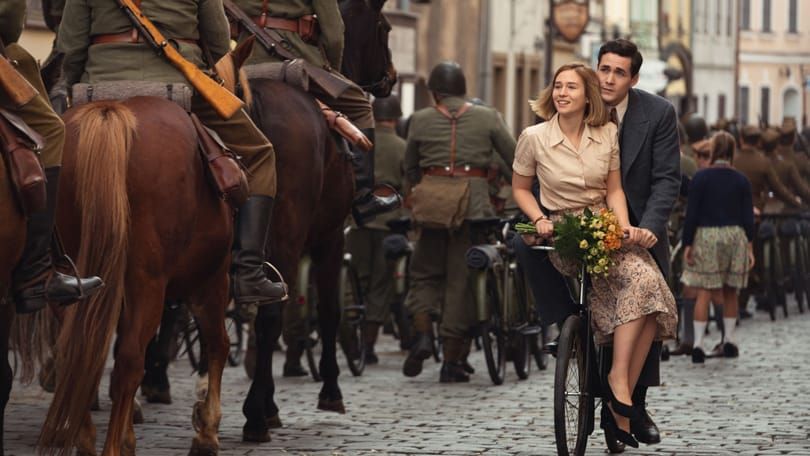
The problem with World on Fire — and it isn’t really a problem — is that we know what’s going to happen. The Second World War has been covered many times in documentaries, notably the BBC documentary series World at War, which served as an inspiration to writer Peter Bowker (The A Word) and in thousands of fictionalized accounts.
So it’s a massive credit to Bowker and his international cast that he succeeds so well in his goal of bringing the war to a personal level, moving across Europe and slicing through class lines, telling the stories of ordinary people. It’s no accident that much of his research included reading diaries of private citizens (recording ordinary experiences was something the British government encouraged). The approach can seem chaotic, particularly when sound effects from one scene blend into the next; or we jump suddenly to different characters hundreds of miles away, and the series demands the viewer’s attention shift accordingly. But war is chaotic, brutal, and unsettling, and again it’s to the series’ credit that so much of this works, even if it isn’t always easy viewing.
The first episode opens on the brink of war in Manchester, UK, where two young idealists, Harry Chase (Jonah Hauer-King, Laurie in the 2017 Masterpiece Little Women) and Lois Bennett (Julia Brown), heckle a rally held by Oswald Mosley, leader of the British Union of Fascists. They are promptly thrown out and arrested. When their respective parents turn up at the police station to bail them out, we realize this couple is from very different social spheres; Harry’s mother, Robina Chase (Lesley Manville, worlds away from her sympathetic role in Mum) is upper class, snide, and contemptuous of her son’s political involvement and his entanglement with a mill worker. She and Lois’s working-class father, Douglas Bennett (Sean Bean), immediately sum up each other’s social status and ignore each other.