Everything to Remember for 'Dalgliesh' Season 3

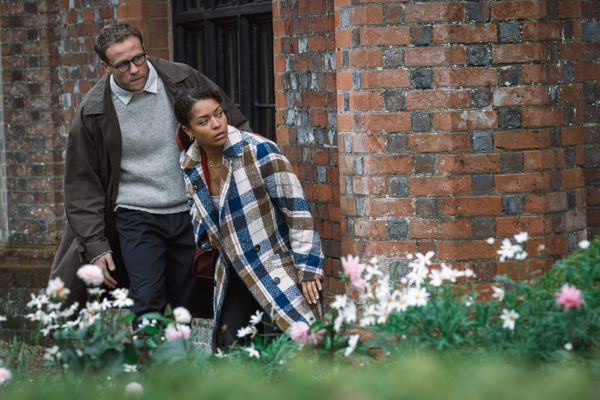
When Dalgliesh first debuted with Bertie Carvel (The Crown) as P. D. James’s titular poet-detective, it was not the first serialization of James’s novels. Roy Marsden starred in the original 1980/90s adaptation, followed by Martin Shaw, who starred in a different version in the early aughts. (Both ran in the states on Masterpiece.). That makes this the third adaptation, which notably, like the Marsden ones, seems to be intent on adapting all of her works. (P. D. James wrote fourteen Dalgliesh novels, published between the 1970s and 2008).
Thus far, each Acorn adaptation series has covered three books, each with two one-hour episodes, which Acorn streams in two-hour blocks. Wisely, the series follows its own timeline and does not attempt a chronological approach. Season 1, for instance, presents Shroud for a Nightingale (1971), The Black Tower (1995), and A Taste for Death (1986), but all we need to know is that these first two seasons have been leading up to Thatcher’s Britain, with Season 3 beginning in 1979.
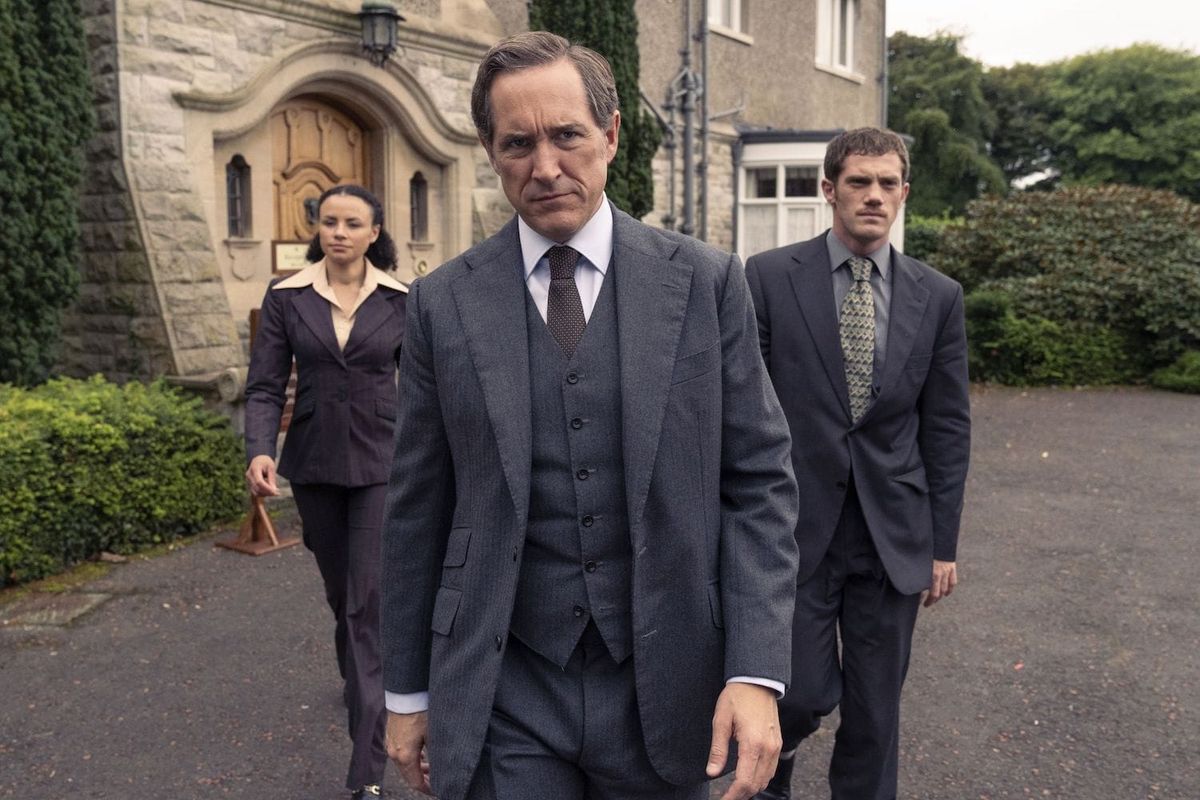
The creators of Dalgliesh streamline each novel into tight, complex storylines. Carvel’s Dalgliesh, grieving for his lost wife and child, is a multi-faceted character whose vocations as a poet and police officer do not always work well together. His bagman from Season 1, Charles Masterson (Jeremy Irvine), was an arrogant bigot, threatened by the presence of a new female hire and not nearly as smart as he thinks he is. Sgt. Kate Miskin (Carlyss Peer) is a working-class Black woman who’s worked her way up from uniform and crushing hard on her boss. Masterson is replaced in Season 2 by Alistair Brammer as Daniel Tarrant, a more middle-class type who keeps his ugly thoughts to himself, but Miskin, after landing a well-deserved promotion at the end of Season 2, moves departments.