Everything You Need to Remember About 'Wolf Hall'

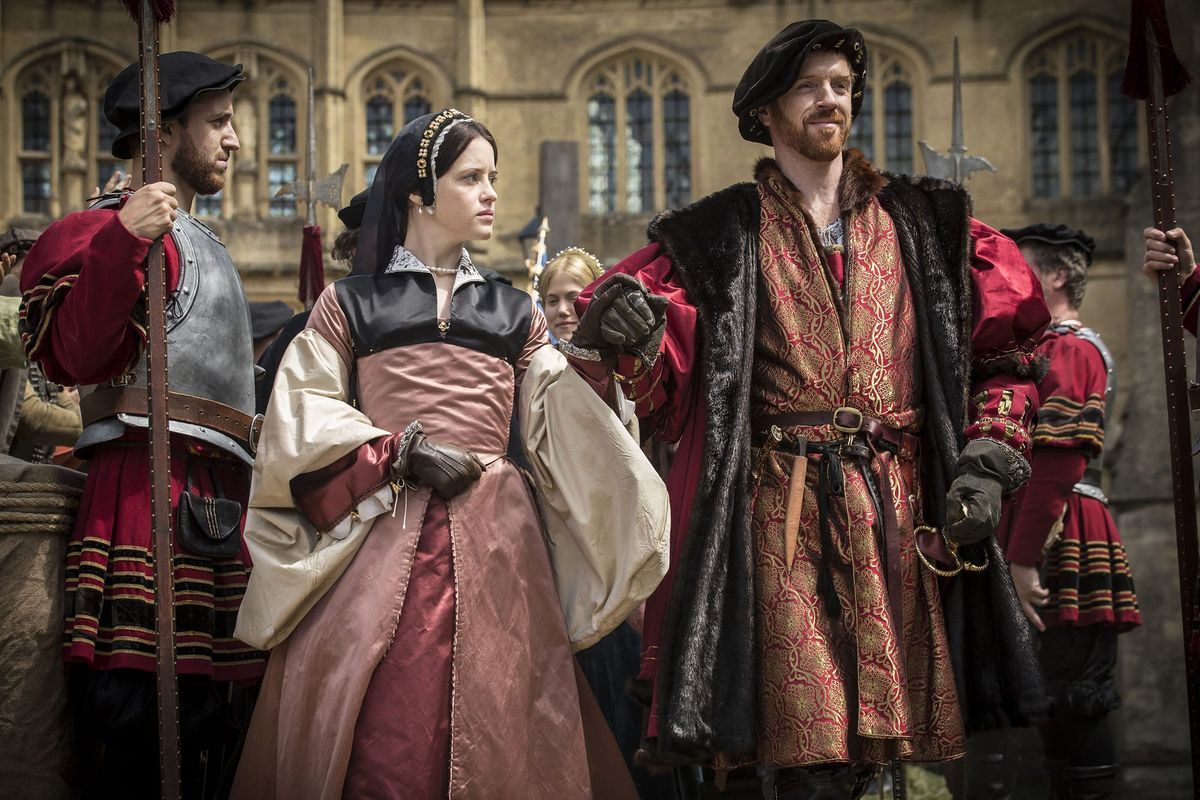
Wolf Hall is, in many ways, the Platonic ideal of what a period drama is supposed to be and do. Sumptuous to look at, gloriously dense, unapologetically intellectual, and made with remarkable attention to period-accurate details, the six-part drama featured an all-star cast of British heavy hitters and racked up eight Emmy nominations. That we're getting a second helping of this world and its story in the form of Wolf Hall: The Mirror & the Light feels like nothing so much as a very expensive and welcome gift. The series is based on a trilogy of novels by the late Booker Prize-winning author Hilary Mantel. The first two —Wolf Hall and Bring Up the Bodies —were adapted for the original six-part series, with the final installment, The Mirror & the Light, used as the material for its sequel. (Although it only covers four years of history, it is packed with drama.)
In many ways, it seems almost unnecessary to write a recap of what happened during the first season of Wolf Hall, given that the bulk of its story is not only a remarkably well-known piece of history but one that's been adapted so many times before. But this drama manages to put its own spin on the rise and fall of Anne Boleyn by shifting its focus to Thomas Cromwell, a man who had an outsize impact on history but who is (strangely) often left out of our larger conversations about Tudor England.
Mantel's fictional take on this period is as much a character study of Cromwell as it is a story of King Henry and is remarkably sympathetic to the blacksmith's son who rose to become a king's right hand. This is, by the way, an interpretation that's somewhat at odds with literary tradition, which generally likes to set Cromwell's scheming and ambition at odds with the quiet moral certainty of men like Sir Thomas Moore and Bishop John Fisher, both of whom were canonized in the Catholic Church following their executions for refusing to acknowledge Henry as head of the church. (It's hard to compete with literal saints, after all.)