‘Murder is Easy’ is a Sublime Diverse Agatha Christie Adaptation

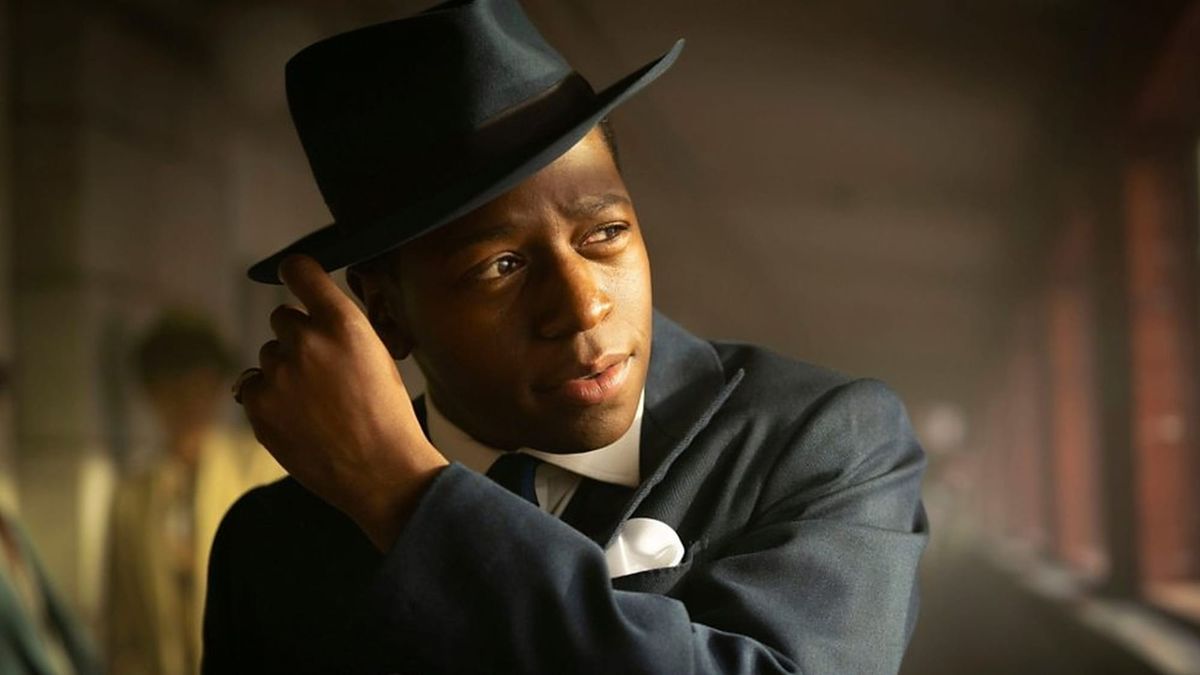
In 1954, Luke Fitzwilliam (David Jonsson) meets Miss Pinkerton (Penelope Wilton) on a London-bound train and learns of suspicious deaths in the opening scenes of Murder is Easy, the newest Agatha Christie adaptation from the BBC and BritBox. A sumptuous visual feast, this two-part limited series excels at adapting a Christie tale from its original post-WWI period. It also infuses the story with themes of national identity, racial and class relations, and gender disparity while teasing out a fun and clever mystery.
Luke is a charming gentleman Miss Pinkerton trusts early and to whom she eagerly confides her suspicions: she’s headed to Scotland Yard to report what she believes are murders. Luke becomes personally involved when Miss Pinkerton is abruptly killed, and he travels to her hometown of Wychwood to investigate the other deaths. Unlike more standard Christie fare, this story is helmed by an amateur sleuth, but one who nevertheless falls into the same category of othered, marginalized persons Christie liked to feature as her main characters.
Wychwood’s residents treat Luke with caution, but that is more about him being an outsider than because he is a black man. He pretends to be writing a book comparing rural English folklore to his own Nigerian stories and customs. In Christie’s book, Wychwood has a supernatural element, which is rightly excised in this adaptation; it has no place in the current story, couched firmly in the “modern-day” sensibility of the 1950s.