'The Decameron' is Fabulously Fun, Featuring Class Commentary & Pandemic Parallels

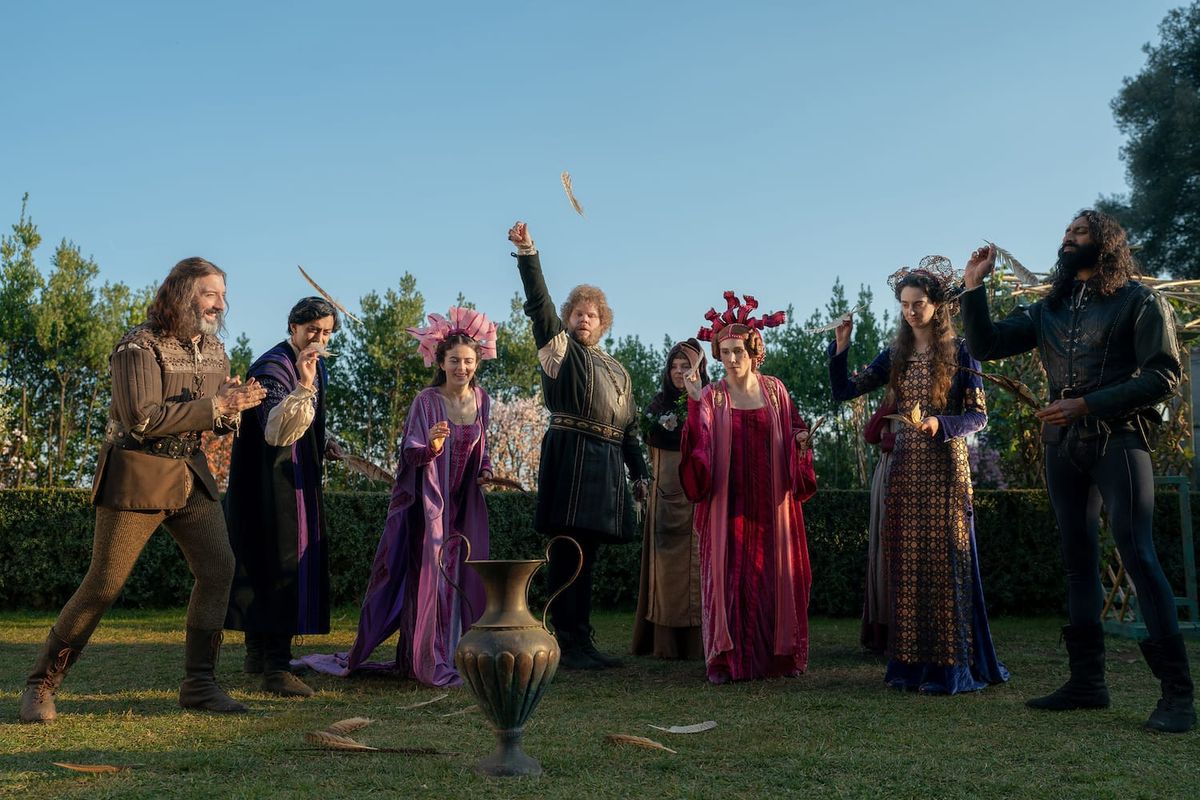
Leave your literature degree behind, and don’t fret over what you don’t remember reading in the 8th grade. The Decameron is a Netflix limited series (very) (loosely) based on the 14th-century Italian anthology of tales, full of lust, fun, dark humor, and unexpected heart. In 1348, Firenze, Italy, was ravaged by the Black Death, and chaos ruled the streets. The highborn families in town are invited to escape to Villa Santa, a nobleman’s estate in the “not-infected” countryside. What ensues is a sometimes uneven journey where the privileged hide in luxury and distract themselves from worldly horrors with food, fashion, wine, and sex, and the three remaining servants desperately try to keep up with their demands.
Although the humor is generally dark, it is also often silly, which occasionally falls flat. The series has a particular Monty Python/sketch comedy feel, and I wouldn’t be surprised if some of the dialogue was improvised. If you don’t like your period pieces to feature modern, anachronistic music, please exit stage right, as this is not for you. But let me assure you the soundtrack is flawless and meticulously thought through. When Depeche Mode’s “Master and Servant” begins after handmaiden Licisca (Tanya Reynolds from Sex Education) pushes her insufferable lady Filomena (Jessica Plummer of EastEnders) into a river, it’s pitch perfect.
As with the music, the dialogue is contemporary, which could be a nod to the source material’s use of vernacular Italian speech. More jarring is the actors speaking in their natural accents, be it English, American, Irish, or Italian, in a melting pot of civilization that may be more representative of the modern-day than the series’ medieval setting.