Feasts for the Eyes – Food in Period Piece Adaptations

Since we’re only a few weeks from Jane Austen’s birthday (December 16), let’s start with a BBC documentary, Pride and Prejudice: Having a Ball, currently available on Acorn TV. Released in 2013, to coincide with the 200th anniversary of the publication of Pride and Prejudice, the documentary shows a re-creation of the ball at Netherfield. The location is Chawton House, owned by Austen’s brother Edward Knight, a short walk away from her own house and one she would have known well. Historians –– specialists in food, dance, music, etiquette, and costume –– collaborated to make the event as authentic as possible. There’s a lot of documentation on food and preparation, but there are also considerable gaps in our knowledge. As food historian Ivan Day points out, the art of dining å la francaise, the norm for Austen’s time, is now lost since plated service (å la russe) replaced it in the mid-nineteenth century.
Dinner å la francaise was a feast for the eye and the palate, featuring many elaborately decorated and presented dishes, both savory and sweet, arranged symmetrically on the table simultaneously. Day and his crew prepared sixty-three dishes (forty were sweet), which were served in two removes (courses). Instead of hovering discreetly out of sight, the footmen are very much in evidence throughout the meal, assisting guests in serving themselves and those seated nearby. Dinner becomes a rowdy, sociable experience, with much reaching and stretching over the table. The footmen were advised: “You’re all professional waiters. So [we] will try to make you unlearn everything you’ve learned because this will be completely different to any table you’ve ever served.”
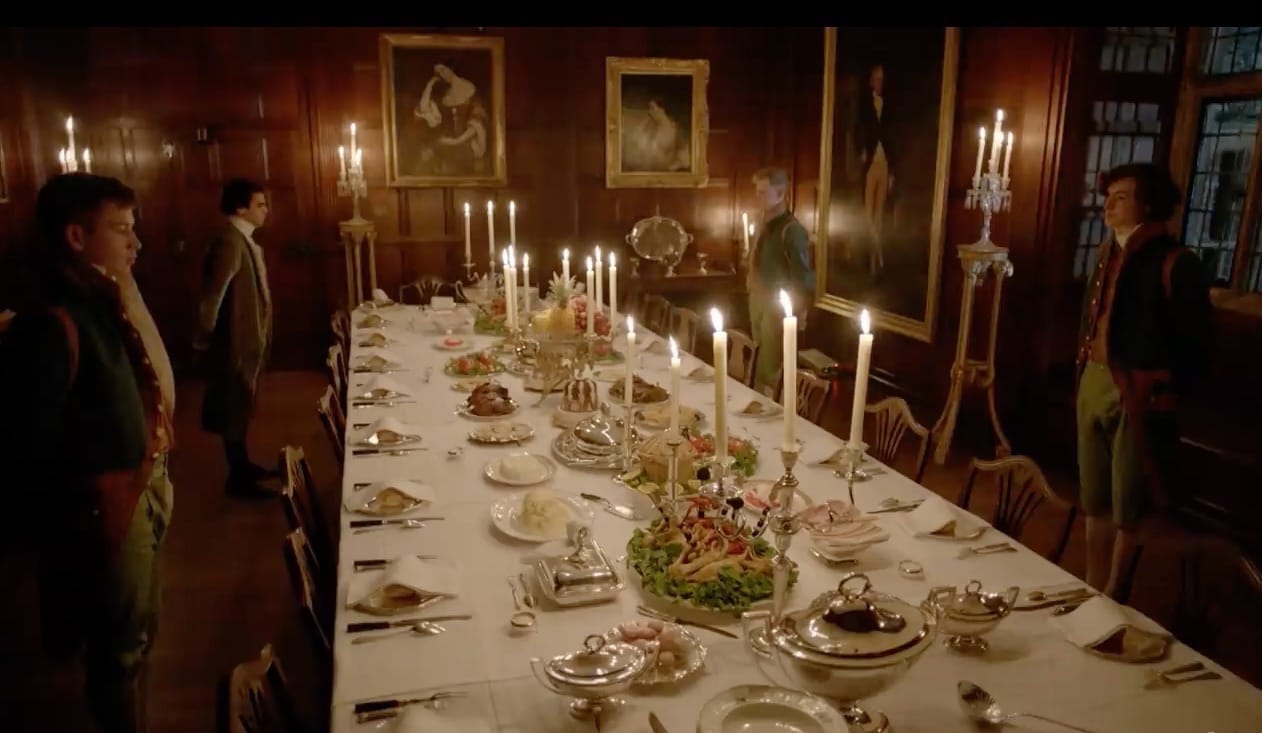
Footmen stand by as hungry guests are about to descend on the dishes of food on the table in the Chawton House dining room.