'Bridgerton' Drops Phoebe Dynevor From Cast for Season 3

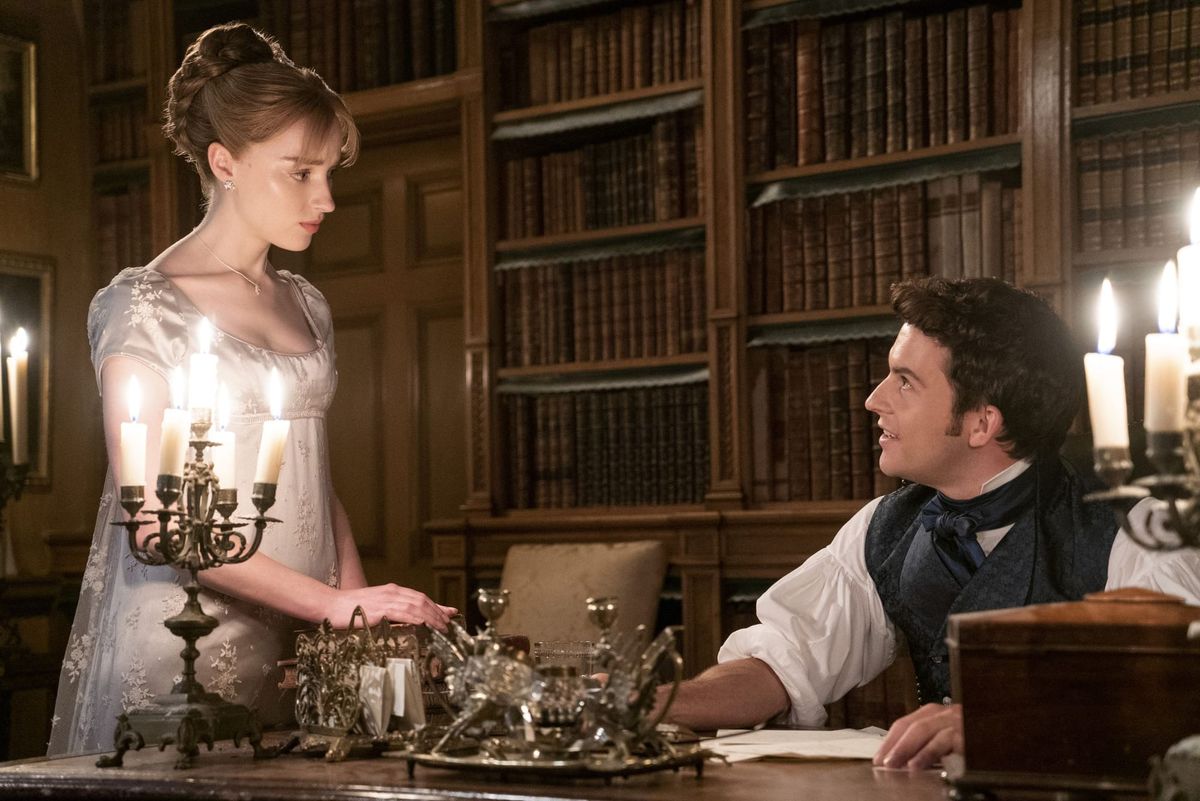
It sometimes seems like Shonda Rhimes never quite realized how popular Bridgerton would be. The thoroughly American idealistic fantasy of Regency England was a massive smash in its first season, forcing the production to hastily announce the actor playing Season 1 leading man Simon Basset, Regé-Jean Page, was never signed for more than the initial season. Despite turning the series into an ensemble, the production thought having each couple exit stage left once their story was over would be the natural process, as it's how romance novels work. Nor has it learned anything, as now the other half of Season 1's leading players, Phoebe Dynevor, is also exiting the show.
For those who have not read Julia Quinn's books, the Bridgerton siblings disappear from the pages once they're hitched. After the first book, Simon is never seen again, and his wife, Daphne, only appears in family emergencies. (Not real crises, mind you, just the ones that require a duchess to haughtily look down her nose at someone lest they were considering giving one of her brothers or sisters the cut direct.) That occurs in the second book, Anthony Bridgerton's story, from which Season 2 took its cues. But Daphne's less needed in the third book and barely mentioned in the fourth novel, which Season 3 will cover.
Though it is brother Colin's turn at romance, Book 4 focuses far less on the Bridgerton family, instead turning its gaze on love interest Penelope Featherington, who also happens to be Lady Whistledown. Unlike the series, the novel features a significant time jump of several years, so Daphne and Anthony (and Benedict) all have a run of minor children to look after at home, leaving them absent for long stretches. Though the time jump most likely won't happen, the show has prepped viewers for a Featherington-focused season by making Penelope's role much larger in Season 1, emphasizing her BFF status with Eloise, and giving the Featherington clan a more significant role in various B-plots.